


Best Museum of the Future Experiences for Anyone Who Loves Design
Anyone who loves design knows the feeling of walking into a space so well-made it stops you in your tracks. The right lines, the right light, the sense that someone agonized over every surface until it felt inevitable. The Museum of the Future in Dubai is that feeling scaled all the way up to a landmark.
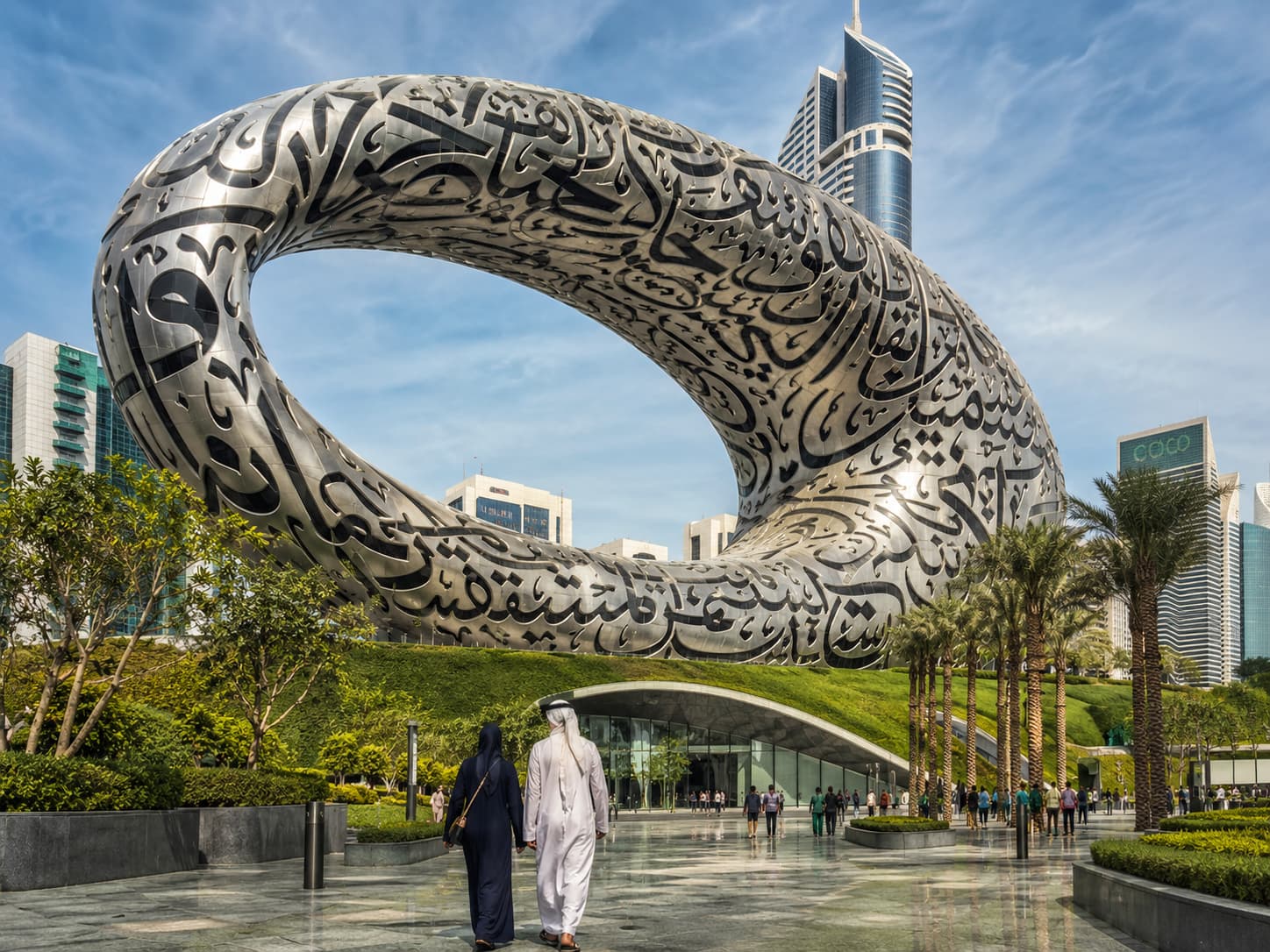
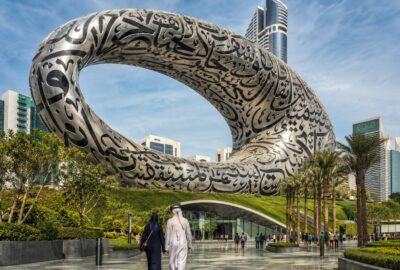
National Geographic named it one of the 14 most beautiful museums in the world, and standing beneath it, you understand why. It is a 77-meter torus, a great steel oval with a hollow void at its heart, its entire surface wrapped in flowing Arabic calligraphy that doubles as the windows. But it is far more than a gorgeous shell. Inside, it is a bold statement about where design and living are heading, and for anyone who follows design trends, it is the ultimate look ahead.
How you experience it depends on what draws you: the architecture itself, the immersive future-worlds inside, or both. Either way, a little planning goes a long way, because this is one of Dubai’s most in-demand attractions.
A few things make the visit smooth. Book well ahead, because entry is timed and popular slots can sell out. Give yourself two to three hours to do the floors justice. And go at the right time to avoid the biggest crowds. Here are the best ways to experience it, ranked.
1. Compare and Book It All in One Place
The Museum of the Future sells timed-entry tickets, and popular dates and times can disappear quickly, especially in peak season and on weekends. There are also various ticket and tour options across platforms. Sorting that, and securing a good slot, is the whole battle. Museum of the Future Tickets is a platform built around this attraction, so instead of gambling on last-minute availability you get the options laid out clearly with the timing sorted.
The value is simple: it helps you lock in the right date and slot before they vanish, and choose the experience that fits you. For a place this popular, that is worth a lot.
You can compare Museum of the Future tickets here and secure your slot before you go, which genuinely matters given how quickly popular times can book up.
Best for anyone who wants a secured slot without the stress. If you have already booked directly, you are set.
2. The Building Itself: A Masterpiece of Design
For design lovers, the building is the first exhibit, and arguably the best. Designed by Killa Design, the torus form is a feat of engineering, a pillar-free structure clad in gleaming stainless steel, with Arabic calligraphy cut through the façade to let natural light inside. It is also a LEED Platinum-certified building, proof that ambitious architecture and sustainability can share a blueprint.
Even before you step inside, the exterior rewards a slow look, and it is genuinely breathtaking lit up after dark. Inside, the soaring central atrium and the light pouring through the calligraphic windows create a remarkable piece of spatial design in their own right. If you appreciate how form, material, typography, engineering, and light come together, this alone justifies the trip.
The only catch is managing your own time, because it is easy to lose half an hour just circling the outside with your camera.
Best for architecture and design enthusiasts who came to see something extraordinary.
3. Step Into 2071: The Immersive Floors
Inside, this is not a museum of glass cases. You experience much of it top-down, beginning with a theatrical journey toward OSS Hope, a simulated space station set in 2071, before working your way through a series of immersive environments.
The Heal Institute shifts the focus back to Earth, exploring biodiversity, ecological restoration, and the relationship between technology and the natural world. Lower still is Al Waha, a wellness-focused environment designed around disconnecting from technology and paying attention to your senses.
Throughout, you do not simply look at exhibits so much as move through designed scenarios, which is exactly why the museum stays with people.
It is busy and heavily interactive, so it rewards curiosity and patience more than a quick march-through.
Best for anyone who wants to feel the future rather than simply read about it.
4. A Glimpse of Future Living
Here is where a design-minded visitor really leans in. Beyond the spectacle, the museum is fundamentally about how we might live, work, heal, build, and interact with technology in the decades ahead, from future cities and mobility to ecological systems and human-machine relationships.
The aesthetic itself is instructive, with clean lines, restrained minimalist palettes, responsive environments, and technology integrated into the architecture rather than simply attached to it. For anyone who thinks about where our homes, workplaces, and public spaces are going, it provides ideas that can outlast the visit.
There is less here for someone who just wants a thrill ride, since much of the payoff is reflective rather than adrenaline-fueled.
Best for design thinkers and anyone curious about the future of how we live.
5. Make It a Design Day in Dubai
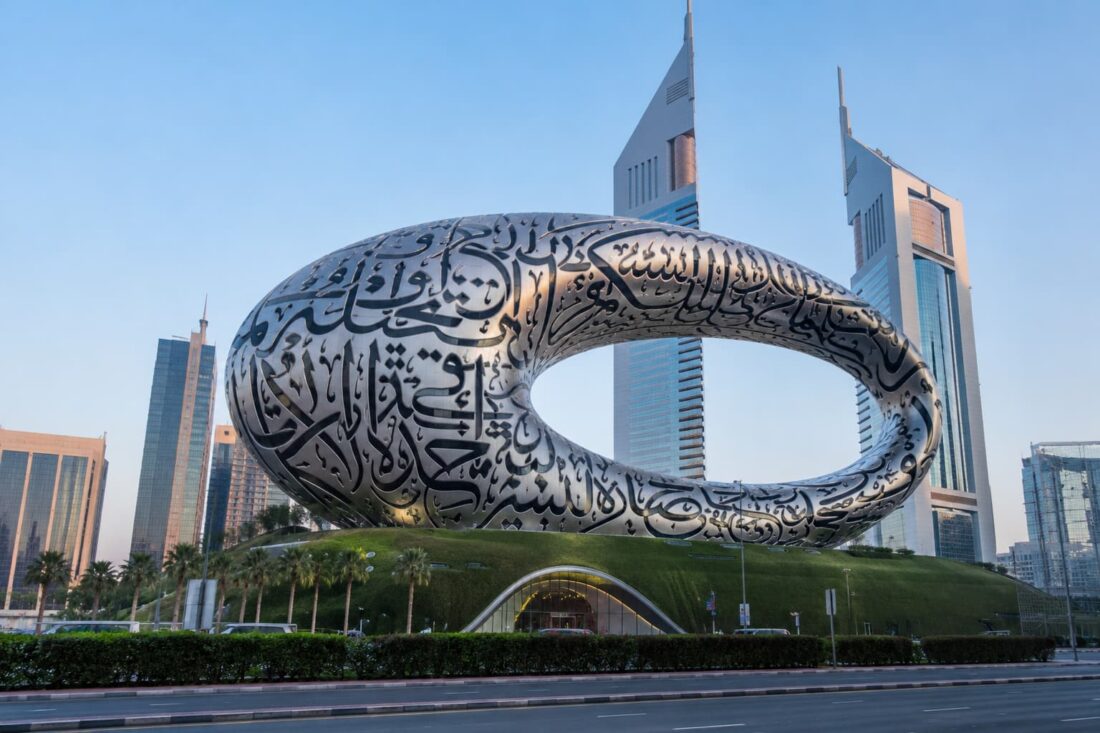
Dubai is a living gallery of ambitious architecture, so build a whole design day around the museum. Pair it with the Burj Khalifa, the world’s tallest building at 828 meters, and the striking Dubai Frame, and you have a day devoted to three very different expressions of the city’s architectural ambition.
Seeing the Museum of the Future alongside Dubai’s other icons puts its vision in context. The Burj Khalifa is an exercise in extreme vertical engineering, the Dubai Frame turns the city itself into the exhibit, and the Museum of the Future uses geometry, calligraphy, and technology to imagine what might come next.
It makes for a full, on-your-feet day, so pace yourself and plan everything around your timed museum entry.
Best for travelers who want to immerse themselves in Dubai’s design ambition.
A Few Practical Things Before You Go
Book online well in advance. Entry is timed, and desirable slots can sell out, particularly during Dubai’s cooler and busier winter season. Ticket prices can change, so check the current rate rather than relying on an older quoted price. Allow roughly two to three hours if you want to explore without rushing.
A weekday morning is generally a good choice if you want a calmer experience. Getting there is straightforward via Dubai Metro: Emirates Towers station connects to the museum area by a dedicated pedestrian link.
Wear comfortable shoes and save time to photograph the exterior, which is free to admire and looks dramatically different as the light changes. For official information, the Museum of the Future site has current ticketing, opening, and visitor details, while Visit Dubai is useful for planning the wider trip. Both pair well with any related design and travel guides already on the site.
Choosing the Right One for You
The Museum of the Future rewards visitors who know what they came for.
Start by comparing your options through Museum of the Future Tickets so you lock in a good slot before it sells out. Here for the architecture, give the building itself the time it deserves. Want the full immersion, dive into the floors and their future worlds. Fascinated by where living is heading, linger on the ideas about future life. Want the complete picture, make it a design day across Dubai’s icons.
However you do it, this is a rare place that treats the future of design not as a mood board but as an experience you can walk through. For anyone who obsesses over the details of a well-made space, it is a whole building doing exactly that, on the grandest possible scale.
Author note: recommendations here reflect the museum and its visitor experience as of 2026. Prices, hours, exhibits, and ticket availability change, so confirm the current details and book ahead before you go.



0